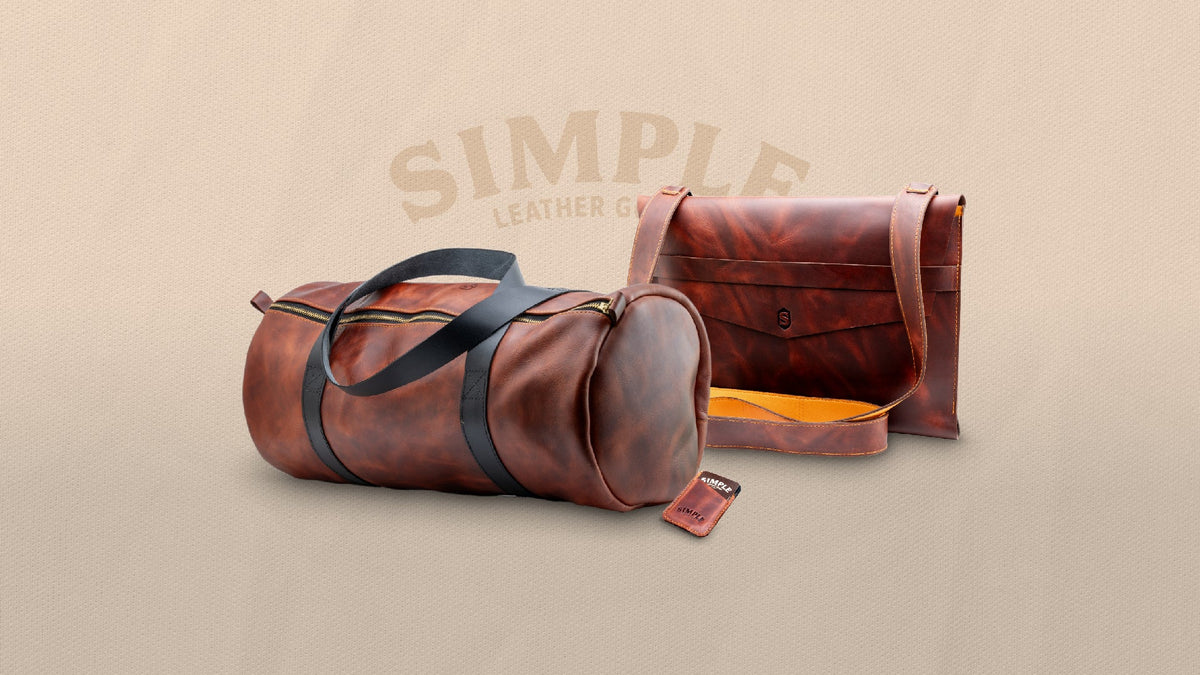



Good leather does not need much, just the right things at the right time. Full-grain leather is a natural material: it absorbs oils from your hands, dries out in the sun and reacts to water. With a little care it softens, darkens and builds a patina that makes each piece unique. Without care it can dry out and crack. This is the routine we use in our workshop in Guatemala City for every wallet, cardholder and bag we make.
1. Everyday care: less is more
- Wipe it with a soft, dry cloth once in a while to remove dust and grime. That is all most pieces need day to day.
- Don't overstuff it. A wallet packed past its capacity stretches and loses its shape. If The Slim is made for 6–8 cards, keep it at 6–8 cards.
- Empty your bag now and then. Keys, pens and loose coins scratch the inside, and heavy loads stretch handles and straps.
- Let it breathe. Leather is skin. Avoid keeping it in plastic bags or airtight boxes for long periods.
2. Conditioning: every few months, or when it looks dry
Conditioning puts back the oils that leather slowly loses. Our rule of thumb: condition a wallet or cardholder every few months, and a bag two or three times a year, or any time the leather looks pale, feels dry or starts to show fine cracks.
- Clean and dry first. Wipe off dust with a dry cloth. Never condition wet leather.
- Use very little. Take a small amount of balm on a soft cloth and work it in with small circles. A thin coat is better than a thick one.
- Let it absorb. Give it a few minutes, or leave it overnight for a very dry piece.
- Buff lightly with a clean cloth to remove any excess.
We make SIMPLE Care for exactly this. It is a natural balm made in Guatemala with castor oil, beeswax and coconut oil, and it is what we use on every piece before it leaves the workshop. Whatever you use, spot test first on a hidden area: conditioners can slightly darken leather. Do not use balms on suede or nubuck.
3. If your leather gets wet
Rain happens, especially in Guatemala's rainy season. If a wallet or bag gets wet:
- Blot the surface with a dry cloth. Don't rub.
- Empty it and stuff bags loosely with paper so they keep their shape.
- Let it air-dry at room temperature, away from heat. No hair dryer, no direct sun, no radiator: fast heat makes leather stiff and brittle.
- Once it is completely dry, apply a light coat of conditioner to bring back its softness.
4. Stains, scratches and marks
Light scratches on full-grain leather often fade if you rub them gently with a clean finger; the warmth and the leather's own oils blend them in. A little conditioner helps too. For oil or grease, blot right away with a dry cloth and avoid water and soap, which can spread the mark. Many oil marks slowly soak into the leather and fade over a few days. Ink and deep stains are hard to remove at home without damaging the finish, so ask a leather professional, or write to us.
5. What not to use
- Alcohol, wet wipes, household cleaners or vinegar: they strip the leather's oils.
- Kitchen oils like olive oil: they can darken unevenly and go rancid.
- Shoe polish with dyes or silicone sprays: they seal the surface and stop the patina.
6. Storage
Store leather in a cool, dry and ventilated place, out of direct sunlight. A cotton dust bag is ideal. Stuff bags with paper to hold their shape, and in humid months check pieces you don't use often, since leather kept in damp, closed spaces can grow mold. If it does, wipe it with a dry cloth, let it air out and condition it.
Patina is the point
Over time, full-grain leather darkens, softens and picks up the marks of daily life. That is not damage; it is what good leather is supposed to do. If you want to understand why some leather ages well and some peels, read our guide to full-grain vs genuine leather. And if you are looking for a piece built to age this way, browse our leather wallets and leather bags.